Source Rubber Fabric Dust Cover Bellows for Vehicle and Industrial Use
Find 30 verified options for rubber fabric dust cover bellows suitable for vehicle, industrial, and agricultural applications. Buyers can compare material types like EPDM and NBR, hardness ratings, and customization capabilities to select the right seal for their machinery.
Key considerations
Products List


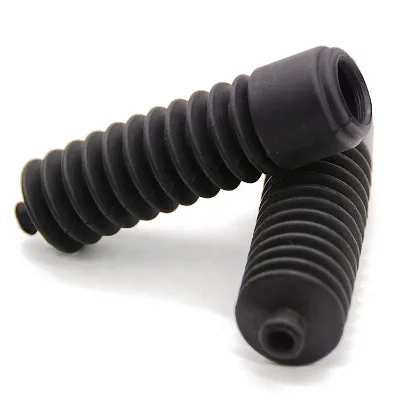


Comprehensive Sourcing Guide
Strategic Sourcing Guide for Rubber Fabric Dust Cover Bellows
Understanding Technical Specifications and Material Selection
When sourcing rubber fabric dust cover bellows, the primary objective is to identify components that offer optimal protection against environmental contaminants while maintaining flexibility under dynamic conditions. The core material composition is the first critical variable. Based on available industry data, these components are frequently manufactured from Nitrile (NBR), Chromium-based compounds, Styrene-Butadiene Rubber (SBR), Silicone (Sil), and Ethylene Propylene Diene Monomer (EPDM). Each material offers distinct advantages; for instance, EPDM is often selected for its resistance to weathering and ozone, while NBR provides superior resistance to oils and fuels. The selection process must align the material properties with the specific operating environment of the application.
Beyond the base polymer, the physical dimensions and structural integrity are paramount. Buyers should verify that the supplier can accommodate custom sizes, as the market data indicates that "Customized" is a standard attribute for these products. The cross-section shape is another vital specification, with "Mountain Type Circle" being a documented configuration that offers specific sealing capabilities. The thickness of the material is another adjustable parameter, with observed ranges including 0.4mm, 0.5mm, 0.65mm, 0.8mm, and 1mm. These variations directly impact the durability and the degree of protection provided. Furthermore, the hardness of the rubber is a critical performance metric, typically ranging from 30 to 90 Shore A. This range allows for a balance between rigidity for structural support and flexibility for movement. The elongation at break is also a key indicator of quality, with observed benchmarks suggesting a minimum of 300%, ensuring the bellows can stretch without tearing during installation or operation.
Compliance, Certification, and Quality Standards
In the B2B procurement landscape, verifying compliance with international standards is non-negotiable for ensuring product reliability and safety. For rubber fabric dust cover bellows, particularly those intended for automotive or industrial use, certifications serve as a proxy for manufacturing consistency. The supply chain data highlights several recognized certifications, including ISO 9001, FDA, and TS 16949. ISO 9001 indicates a robust quality management system, while TS 16949 (now IATF 16949) is specifically critical for automotive components, ensuring that the supplier meets the rigorous demands of the vehicle industry. Additionally, FDA certification may be relevant for applications involving food processing or medical devices where material safety is paramount.
Buyers must also scrutinize the standard classification of the products. The market distinguishes between "Standard" and "Nonstandard" items, with many suppliers offering "Customizable" standards to meet unique engineering requirements. It is essential to confirm that the supplier's "prod_standard" aligns with the specific design drawings provided. The documentation should explicitly state whether the product meets specific industry standards or if it is a bespoke solution. Furthermore, the "Certificate" field often lists CE marking, which is a mandatory conformity mark for products sold within the European Economic Area. When evaluating a potential supplier, request copies of these certificates and verify their validity dates. Do not rely on verbal assurances; written proof of compliance is necessary to mitigate the risk of supply chain disruptions or regulatory non-compliance.
Cost Drivers and Pricing Dynamics
The pricing structure for rubber fabric dust cover bellows is influenced by a complex interplay of factors, including material costs, customization levels, and order volume. The observed price range in the market spans from $0.01 to $1000 per unit, a vast spectrum that reflects the diversity of product configurations. The lower end of the spectrum typically corresponds to standard, off-the-shelf items with minimal customization, while the higher end reflects complex, custom-engineered solutions requiring specialized tooling and materials.
Material selection is a primary cost driver. High-performance materials like Silicone or specialized EPDM blends generally command a higher price than standard NBR or SBR compounds. Additionally, the thickness of the material directly correlates with cost; a 1mm thick bellows will inherently cost more than a 0.4mm version due to the increased volume of raw material used. Customization is another significant factor. While customization is widely available, it often incurs additional tooling charges and higher per-unit costs, especially for low-volume orders. The Minimum Order Quantity (MOQ) also plays a crucial role in pricing. The observed MOQ range is 1 to 500 units. Buyers purchasing at the lower end of the MOQ spectrum may face higher per-unit costs, whereas larger orders often benefit from economies of scale.
Lead time is another hidden cost driver. The standard lead time for these products is reported as 15-20 days, referenced to the design. Rush orders or expedited shipping can significantly increase the total cost of ownership. Buyers should factor in the "Capacity" of the supplier, which is observed to be around 100,000 pieces per month. A supplier with high capacity may offer better pricing stability and faster turnaround times compared to smaller operations.
Typical Applications and Performance Requirements
Rubber fabric dust cover bellows are versatile components designed to protect sensitive machinery from dust, debris, and moisture while allowing for movement. The application data reveals a broad spectrum of usage across multiple sectors. These include Medical, Household, Electronic, Vehicle, Agricultural, and Industrial environments. In the automotive sector, these bellows are frequently used as "Dust Seals" or "Wiper Seals" to protect suspension components, steering linkages, and hydraulic cylinders. The "Application" field specifically lists "Car" and "Vehicle," highlighting their critical role in maintaining vehicle longevity.
Beyond the automotive industry, these components are essential in Household Appliances, Electronic Products, and general Machinery. The functional requirements for these applications are diverse. The bellows must provide "Waterproof," "Oil Proof," "Dust Proof," and "Spark Proof" capabilities. The working temperature range is a critical performance metric, with observed data indicating a capability to operate between -40°C and 230°C. This wide temperature tolerance makes them suitable for extreme environments, from arctic conditions to high-heat industrial processes. The "Effect" of the product is often described as a "Wiper Seal," indicating its ability to wipe away contaminants as it moves. The "Maximum Strength" is noted as customizable, allowing engineers to design bellows that can withstand specific mechanical loads without failing.
Supplier Evaluation and Production Capabilities
Selecting the right supplier requires a thorough evaluation of their production capabilities and logistical infrastructure. The "Place of Origin" for many of these products is identified as Xiamen, China, a region known for its manufacturing prowess in rubber and plastic components. When evaluating suppliers, buyers should assess their production capacity, which is observed to be up to 100,000 pieces per month. This capacity ensures that the supplier can handle large orders without compromising on delivery schedules.
The supplier's ability to offer "OEM/ODM" services is another critical factor. The data confirms that OEM/ODM is "Yes" or "Welcomed," indicating that suppliers are equipped to manufacture products based on the buyer's specific designs or to develop new solutions from scratch. This flexibility is essential for companies seeking unique product differentiation. Additionally, the "Customization" attribute is universally available, allowing for tailored solutions in terms of size, color, and logo printing. The "Logo" field indicates that logo printing is acceptable, though some suppliers may offer options "Without Logo Printing" depending on the client's preference.
Logistics and packaging are also important considerations. The "Packing" methods vary, with options including "Plastic Bag & Carton Box," "PE Bag Inside, Carton Box Outside," or "Seal Paper, Carton." The "prod_packing" field further specifies that products are often packed in cartons and then on pallets, or according to specific customer requirements. This flexibility in packaging ensures that the products arrive in optimal condition, minimizing the risk of damage during transit.
Quality Control and Long-Term Procurement Considerations
Ensuring consistent quality in rubber fabric dust cover bellows requires a robust quality control (QC) framework. Buyers should implement a multi-stage QC process that includes incoming material inspection, in-process monitoring, and final product testing. The "Performance" attribute, specifically "Wear," suggests that durability is a key quality metric. Suppliers should be able to provide test results or data demonstrating the wear resistance of their products. The "Hardness" and "Elongation at Break" values mentioned earlier should be verified through regular testing to ensure they remain within the specified ranges.
Long-term procurement considerations involve building a sustainable relationship with suppliers who can adapt to changing market demands. The "Lead Time" of 15-20 days is a standard benchmark, but buyers should negotiate terms that allow for flexibility in case of supply chain disruptions. The "Capacity" of 100,000 pieces per month suggests that suppliers have the potential to scale, but buyers should confirm this capacity in writing to avoid bottlenecks. Additionally, the "Standard" and "Customizable" nature of the products means that buyers should maintain open communication with suppliers to ensure that design changes are implemented smoothly.
Finally, buyers should consider the environmental impact of their procurement decisions. Materials like EPDM and Silicone are often more environmentally friendly than other rubber compounds. Verifying that the supplier adheres to environmental standards and uses sustainable manufacturing practices can enhance the brand reputation of the buyer. By focusing on these long-term factors, buyers can secure a reliable supply chain that supports their operational goals and sustainability initiatives.
Comparative Analysis of Product Attributes
To facilitate a clearer understanding of the variations available in the market, the following table summarizes key attributes observed in the product data. This comparison aids in making informed decisions based on specific project requirements.
| Attribute | Standard/Observed Range | Customization Option | Relevance to Application |
|---|---|---|---|
| Material | NBR, Cr, SBR, Sil, EPDM | Yes | Determines chemical and temperature resistance |
| Hardness | 30-90 Shore A | Yes | Affects flexibility and load-bearing capacity |
| Thickness | 0.4mm - 1.0mm | Yes | Influences durability and sealing effectiveness |
| Temperature Range | -40°C to 230°C | Yes | Critical for extreme environment applications |
| Elongation at Break | >=300% | Yes | Indicates stretchability and resistance to tearing |
| Certification | ISO 9001, FDA, TS 16949, CE | Yes | Ensures compliance with industry standards |
| Lead Time | 15-20 Days | Variable | Impacts project scheduling and inventory planning |
| MOQ | 1 - 500 Units | Variable | Affects initial investment and cost per unit |
| Packing | PE Bag + Carton, Palletized | Yes | Ensures product safety during transit |
This table highlights the flexibility inherent in the rubber fabric dust cover bellows market. While standard attributes provide a baseline, the extensive customization options allow buyers to tailor products to their exact specifications. By leveraging these attributes, procurement professionals can optimize their sourcing strategies to achieve the best balance of cost, quality, and performance.
FAQs
What materials are used for rubber fabric dust cover bellows?
These bellows are commonly manufactured from NBR, SBR, Silicone, EPDM, and Chromium-based compounds. Buyers can select specific materials based on required resistance to oils, weathering, or extreme temperatures for their application.
Can I request custom sizes and colors for these products?
Yes, customization is available for size, color, and logo printing. Suppliers offer tailored solutions where dimensions and colors like black, green, or white are adjusted according to specific customer design requirements.
What certifications do these rubber bellows typically hold?
Products often carry ISO 9001, FDA, TS 16949, and CE certifications. These credentials verify quality management systems and compliance with automotive and food safety standards for reliable industrial and vehicle applications.
How long does it take to produce custom rubber bellows?
The standard lead time is 15 to 20 days referenced to your design. This duration applies to customized orders, while suppliers maintain a monthly capacity of up to 100,000 pieces to handle volume.
What is the hardness range for these rubber components?
The hardness typically ranges from 30 to 90 Shore A. This flexibility allows the bellows to balance structural rigidity with the necessary elongation at break of at least 300% for dynamic sealing.
Where are these rubber fabric dust cover bellows manufactured?
The primary place of origin for these products is Xiamen, China. Suppliers in this region offer various packing options and are equipped to handle OEM and ODM requests for global distribution.
What temperature range can these bellows withstand?
These components operate effectively between -40 and 230 degrees Celsius. This wide working temperature range ensures durability in extreme environments for industrial, vehicle, and household appliance applications.